SUSTAINABLE RACING INDUSTRY FOR THE FUTURE
MEDIA RELEASE
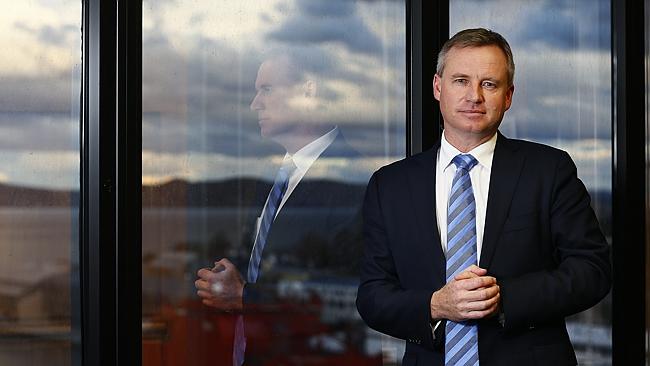
Jeremy Rockliff, Minister for Racing
The Hodgman Liberal Government is committed to fixing the budget mess and investing in frontline services. We are committed to getting our priorities right and we are committed to doing what’s in the best interests of the Tasmanian community.
In addition to this, the Government is also a key supporter of important industries, like the racing industry.
For some time, I have been working with Tasracing and industry representatives about how we can put this industry onto a sustainable footing for the future.
I have reaffirmed the Government’s commitment to maintaining the current level of support and honouring the deed that is in place with the industry. We will ensure that racing gets the level of funding that they have been promised. There will be no reduction in Government funding for racing.
However, the Government is determined to manage the budget and apply strict fiscal discipline, and that applies to our support for racing too.
I know that some in the industry will be disappointed to learn that the Government has decided not to increase the taxpayer’s existing $30 million contribution to the racing industry, but I believe the community will understand and appreciate why I have made that decision.
I know that the racing industry faces budget challenges, just like many other areas that the Government is responsible for funding, but the Government simply cannot agree to divert more funding away from areas like health, education and public safety to give to the racing industry.
In the 2014-15 financial year, of the $29.2 million in government funding, Tasracing was required to commit almost $24 million to stakes alone. Tasracing has a structural funding gap of between $3-$5 million. The previous Government knew this, but failed to act, instead relying on band-aid measures which has meant the company cannot invest in infrastructure or growing the racing industry. We need to take action now.
Today the Government has announced a package of measures which will ensure the sustainability of Tasracing and the wider industry.
This includes:
- Amending the Tasracing Funding Deed to remove the requirement to maintain stakes in “real terms” each year, so as to allow the company to close the funding gap by resetting prize money and industry funding;
- Amending the Funding Deed to allow Tasracing flexibility to roll over any unallocated prize money into future years. This means the prize money for races which are cancelled due to poor weather can be reallocated as appropriate, rather than having to be spent before the end of the financial year;
- Amending the Funding Deed to broaden the definition of capital expenditure, to improve the capacity of Tasracing to access capital via its existing Tascorp debt facility;
- A $250,000 annual allocation to Tasracing from unclaimed monies from wagering winnings, to be applied to capital expenditure; and
- The continuation of borrowing support for principal, interest and guarantee fees in relation to the non-capital related borrowings of Tasracing for a period of up to two years. This debt support was provided by the previous Government. The changes to the Funding Deed will allow Tasracing to begin paying their own debt once they are on a sustainable footing.
- The Tasmanian Racing Industry Working Group’s recommendations were presented to me late last year in a confidential report. The Working Group did not recommend a reduction in stakes, however the Government has been clear that we cannot allocate extra money to Tasracing’s Funding Deed.
The Working Group, however, recommended other sustainability solutions which the Government is acting on. To view these full recommendations go to the full official government media release here; Sustainable racing industry for the future Media Release – Jeremy Rockliff, Minister for Racing.
Financial sustainability is essential to Tasracing. It will allow the company to operate with a long term view as to what changes are required within the industry for it to grow and prosper. It will ensure that track assets are maintained to a high standard and that appropriate strategic investments are made in new infrastructure. While a reset of prize money and industry funding will result in an adjustment for the industry in the short term, in the long term it will provide confidence and certainty, and comfort in the fact that the industry has its future in its own hands.
I have complete confidence that Tasracing, in consultation with the broader racing community, will create a sustainable industry that will continue to grow into the future.
Ends.
TASRACING OFFICIAL MEDIA RELEASE:
Tasmanian racing industry funding realignment
Tasracing and the Tasmanian Government will immediately commence working with the Tasmanian racing industry to implement the planned changes announced by the Racing Minister today (22 July).
Tasracing chief executive officer Dr Eliot Forbes said the changes announced by the Minister would not only deliver a sustainable business model, it guaranteed a future for the industry.
“Industry meetings would be scheduled as soon as practical to present information in greater detail,” he said.
Dr Forbes said while Tasracing’s business performance had been very strong in recent financial years, even with extraordinary revenue growth it was not possible for the company to trade its way out of the funding gap issue it had been managing since the first day of operations.
“In 2012/13, Tasracing reduced its costs by more than $1 million,” he said.
“This was achieved by reducing the number of executives from three to two, and reducing staff and administrations costs.
“The 2013/14 annual report clearly reflects that these savings were maintained, safety and risk outcomes improved, wagering was up by more than 10 per cent and racefield fee income up by 36 per cent to $6.8 million.
“Administration costs in 2011/12 were 7.7 per cent of total expenditure. These were reduced to 5.7 per cent in 2012/13 and were maintained in 2013/14.
“At the same time, Tasracing has increased prize money and industry funding in line with CPI since it was established in 2009.
“In addition, our four-year wagering growth was $130 million, or 32 per cent. Wagering on Tasmanian racing in 2014/15 totalled $475 million.
“Yet, the underlying problem that has existed since 2009 remains – the business model remains unviable without government intervention.
“Put simply, there is a recurrent gap of $3 million and it needs to be closed with either additional funding, which the Minister ruled out last year, or reduced prize money.
” It is proposed that the stakes reduction will be spread across the three codes on an equal percentage basis – $1.6 million reduction for thoroughbreds so that the code will receive $10.9 million, $791,000 for harness to $5.26 million and $564,000 for greyhounds to $3.76 million.
The reductions will be planned to minimise impact on local participants, maintain equitable outcomes for all three codes and preserve race field fee income wherever possible. Importantly, base stakes will be preserved.
Dr Forbes said it was planned to implement the changes from 1 October 2015.
“Tasracing will endeavor to provide a CPI increase to prize money from 2016/17,” he said.
Dr Forbes said Tasracing would work with industry to remove lower performing race meetings from a commercial context as well undertake a review of staking levels of selected feature races.
“Proposals that have been modeled for industry consultation suggest 94 per cent of racing volume can be maintained,” he said.
“For our part, on top of the savings already achieved, Tasracing will be reviewing its operations to identify further inefficiencies.”
Background
- Tasracing was established in 2009 with a $4 million funding gap.
- The Board communicated its concerns to the state government of the day.
- The sale of TOTE Tasmania by the government made it necessary to replace the industry’s traditional funding stream (TOTE Tasmania) with a 20-year government funding deed.
- When announced, the deed was worth $27 million annually and indexed at CPI minus one per cent.
- Under the deed, Tasracing was required to maintain prize money for the industry in real terms (CPI).
- Tasracing also inherited a $1.5 million debt from TOTE Tasmania and incurred an additional loan for $1.6 million because of the delayed implementation of race field fees legislation.
- When TOTE Tasmania was not sold on the first attempt, an original $40 million capital development grant was not provided and a $40 million loan facility was instead put in place. The non-receipt of the grant and loss of interest income placed further pressure on the model.
- A temporary solution was put in place in August 2012, but the underlying issue was not corrected. That package has expired.
- In 2012/13, Tasracing reduced its costs by more than $1 million, delivering a $2.2 million net improvement. These savings have been maintained to date.
- In 2014/15, wagering turnover on Tasmanian racing grew by nearly seven per cent to $475 million. This means Tasracing has achieved wagering turnover growth of $130 million or 32 per cent over the past four financial years. Tasracing earns commercial revenue from racefield fees derived from turnover from wagering operators.
- Tasracing, in partnership with Sky Channel, has expanded Tasmanian thoroughbred’s racing international footprint that now includes regular broadcasts to France, Singapore, New Zealand, South Africa and the UK.
- Over the past three years Tasracing has assumed additional race day responsibility from thoroughbred clubs within existing resources.
- Despite ongoing losses since inception, Tasracing has increased prize money and industry funding in line with CPI.